Singing as Storytelling: It Was Never Just About Music
The Discovery
Have you ever heard of San Gimignano? It's a medieval town that has endured since the 13th century. It's also the host of the Festival of the Harvest, a primarily medieval festival, featuring knights in jousts, markets with artisans and traditional music performances.
The first time I heard about it I was 13 years old (a coincidence?). My cousin had just returned from the festival, which he took part in as a minstrel. As I was watching the photos and videos he took I thought — this is it. I had found my fantasy world.
Uncovering Hidden Music
Over the years, I was fortunate to have been introduced to a variety of alternative music. When I say alternative, I mean something that was not readily accessible at the time, but had to be uncovered, almost like a rare manuscript. It included a variety of genres, from medieval religious chants to Celtic folk.
It wasn't popular, and I certainly had no one to play it with. Still I learned the tunes and melodies (having little to no idea what the lyrics meant as the internet wasn't a thing at the time), mostly in the sanctity of my bedroom back in my hometown. That world felt somehow familiar, like reliving a memory from past lives, if you believe in such things.
Finding My Tribe
Then came The Mists of Avalon, the Lord of the Rings trilogy, followed by video games like Skyrim and The Witcher, and then The Vikings. Luckily for me, more and more people were being drawn to the mystical world of medieval-inspired music and folklore. I felt I have found my tribe.
Fast forward to 2019, the idea was steadily forming in my mind about what kind of music I actually wanted to sing, given the compendium of musical influences I had been exposed to. And more importantly, what stories I wanted to tell.
The Last Piece of the Puzzle
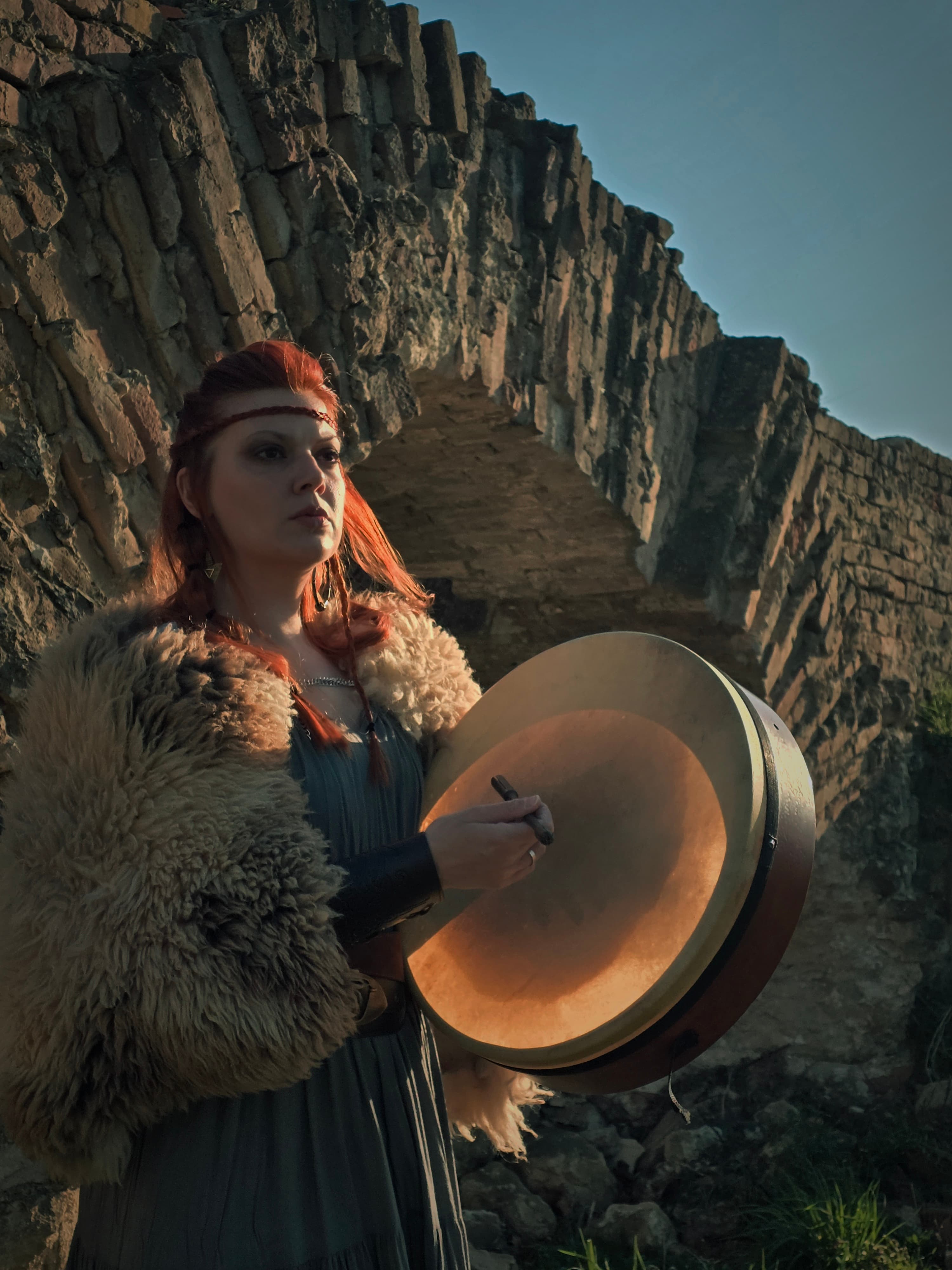
Around that time, I started playing the bodhrán, a traditional Irish skin drum. This has been the key component I was waiting for. The last piece of the puzzle, if you will. It gave me a clear direction in which to go — acoustic, ambient, heavily influenced by traditional music and folklore.
Disunna was officially born (or reborn, if we were to follow my previous musings on past lives).
Through Disunna, I was able to recreate that feeling I had at 13, like I had stumbled into a world that existed long before me and would exist long after.
Singing as Storytelling
Singing became a form of storytelling. It became an echo of something ancient. Sometimes it's a lament. Sometimes it's a ritual. Sometimes it's just a sound that lingers long enough to make you feel like you've almost remembered something.
The bodhrán grounded that for me. It gave my voice a pulse and a sense of movement. It became a reminder that even the most ethereal sounds come from something physical and human. That balance between the grounded and the otherworldly is where Disunna lives.
Looking back, it makes sense why none of this ever felt like a phase. It wasn't a genre I grew out of. It was a language I was slowly learning.
The Questions Behind Every Song
Every song I work on now starts with these questions:
- What does this feel like?
- What does it want to say?
- What world does this belong to?
If it doesn't take me somewhere, I know it won't take anyone else there either.
So when people ask me what kind of music I sing, I hesitate. It's not just folk. It's not just ambient. It's not just "medieval-inspired."
It's a story. And in a way, it always has been.